Mostrando postagens com marcador Japanese. Mostrar todas as postagens

quarta-feira, 5 de junho de 2013

Tech Tree

Today i will say about the current Tech Tree in the World of Warplanes. you will see that it works like the World of Tanks tech tree, with same experience and so interface, so for old tankers it will be piece of cake.


This up above is the japanese tech tree, as you can see, still only a few planes, only carried based fighters, and no gold planes, as in beta testing, it is normal to have such a few planes, but soon this will be expanded to near 100 planes, as i read, this will be made for all the tech trees. 
One thing i loved about this game is that it dont start with the Zero as a tierI, but starts with some interwar planes like the Type 96, this makes you immerse more in the WWII aviation history.
In this tech tree i am with the A5M, nice fighter, but fragile.


This is the German line, with more planes than the japanese one, and some heavy fighters, and some gold planes too, i am with the Ar-86 nice but quite slow plane to fight against the Bf 109 and so, it goes up to planned german jet fighters so, is long term fun here!


This is the soviet one, with attack planes (the only attack planes in the game now) and some nice fighters, honestly i dont have flow because my personal hatred of the reds, but, i will give it a try soon i can get top tier japanese planes.

The last one is the american tech tree, with some good planes, only fighters, land based and carrier based, it will be expanded in the future, i have one gold fighter, the second one, nice fighter, quite underarmed, but nice to fly and with a rear gunner who helps a lot (as rear gunners are quite overrated in this game).

So this is the tech trees, soon i will post about the modules and internal upgrades of some planes, for now, this is it, i hope you enjoy folks.

segunda-feira, 8 de outubro de 2012

History of Sake


Sake is the traditional rice wine of Japan. It comes in several different varieties, and was first made at least 2,000 years ago. Since then, sake has played an important role in Japanese culture and history. From its origins as the "drink of the Gods" to its current status as one of the most popular drinks in the country, the history of sake is steeped in tradition, innovation, and custom. 
Sake was first brewed in Japan after the practice of wet rice cultivation was introduced in that country around 300 B.C. Though the origins of sake can be traced in China as far back as 4,000 B.C., it was the Japanese who began mass production of this simple but delicious rice concoction. The basic process of making sake involves "polishing" or milling the rice kernels, which were then cooked in good, clean water and made into a mash. The earliest "polishing" was done by a whole village: each person would chew rice and nuts and then spit the mixture into a communal tub – the sake produced was called "kuchikami no sake," which is Japanese for "chewing the mouth sake." The chewing process introduced the enzymes necessary for fermentation. Although it was part of a Shinto religious ceremony, this practice was discontinued when it was learned that Koji (a mold enzyme) and yeast could be added to the rice to start the fermentation process. 
At first, sake was produced for private consumption by individual families or villages. While this practice continued, sake rice also became a large scale agricultural product. The largest production area was centered around Nada, near the present-day city of Kobe. Although more sake was being made, it was mostly consumed by the upper classes. Sake was used for many different purposes in the Shinto religion, including as an offering to the Gods and to purify the temple. The bride and groom each consume sake in a Shinto wedding ceremony in a process known as Sansankudo. There were many other uses for sake in Shinto, most of which are still in practice today.
It was in the 1300s that mass production of sake allowed it to become Japan's most important drink. In the years that followed the production process was improved, and sake breweries popped up throughout the nation. All of the early variations of sake were cloudy until a seventeenth century brewery worker thought to use ashes to settle the cloudy particles in the sake. The story has become somewhat of a legend, because the employee was apparently disgruntled, and was trying to destroy the batch; instead, his actions refined the sake and earned him a place in history. Japan's Industrial Revolution in the nineteenth century introduced automation and machinery into the brewing process, making this popular drink even more available. 
In the twentieth century, a press replaced the traditional canvas bags for squeezing the liquid out of the rice mash, yeast, and koji mixture, although some sake is still brewed the old-fashioned way. Shortages of rice in World War Two also caused changes in the brewing process: glucose and pure alcohol were added to the rice mash in order to increase the production yield and brewing time. Although borne of necessity, this process has been continued to this day, but sake made with just water, koji, yeast, and rice is still available. 
Though the brewing process and availability of sake has changed over the years, sake's important role in Japanese culture has not. From its earliest beginnings sake has been a drink of reverence, family, and friendship, consumed to mark important occasions. Because it is meant to be enjoyed with friends and family, tradition holds that a person must never pour their own sake; instead another person pours for you, and you do the same for them. For thousands of years sake has been a major part of Japanese life, and its popularity is now increasing on the international stage.

Source:


sábado, 6 de outubro de 2012

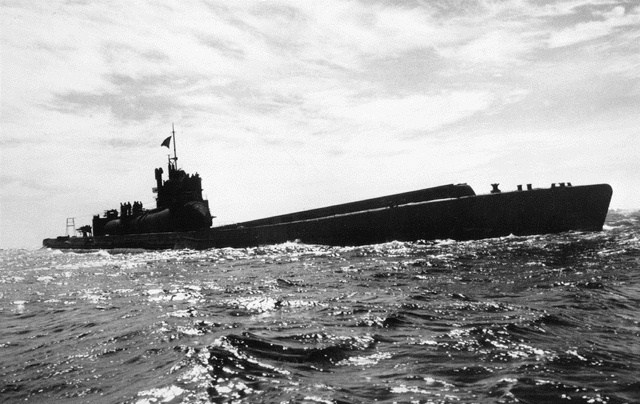
World War II Pacific Naval Campaign: Japanese Submarine Campaign


World War II Pacific Naval Campaign: Japanese Submarine Campaign


The Japanese Navy got its first submarines from the United States, buying them from the Electric Boat Company in the early 20th century. More sophisticated submarines were obtained as part of the World War I peace settlement. The Allies gave thge Japanese a number of German U-boats. After the War, the Japanese Navy began to focus on the American Navy as its most likely future opponent. The Japanese began building an advanced submarine, the I-class submarines. This submarine reflected the empire that Japan began to conceive in Southeast Asia and the Pacific. The I-boats were very large submarines, reflecting the vast distances involved in Pacific operations. The I-class were 350 ft long and had ranges of 20,000 miles, more than twice that of 7,000-8,000 mile range of the German U-boats. The Japanese had smaller subs for coastal patrol, but the backbone of the fleet was the I-class boats. Surprisingly the substantial Japanese submarine fleet had little impact on the Pacific campaign. Unlike the Americans, the Japanese began the War with the effective Type 93 Long-Lance Torpedo. The Japanese Navy never used their submarines to interdict American supply vessels. Rather they were used to target fighting ships with only limited success because of their tactical deployment. The Japanese used theor submarines as scouts and to targer warships. As the American offensive moved toward the Home Islands, the Japanese used their submarines to supply bypassed island garisons, some of which were near starvation. They were also used to supply bypassed islasnd bases where garrisons were close to starvation. They also managed to get some secret German military technology to Japan late in the war (1944). The Japanese developed especially large sunmarines that could carry a few planes. They were planning an attack on the Panama Canal until the subarines were redeployed to defend Okinawa (1945).